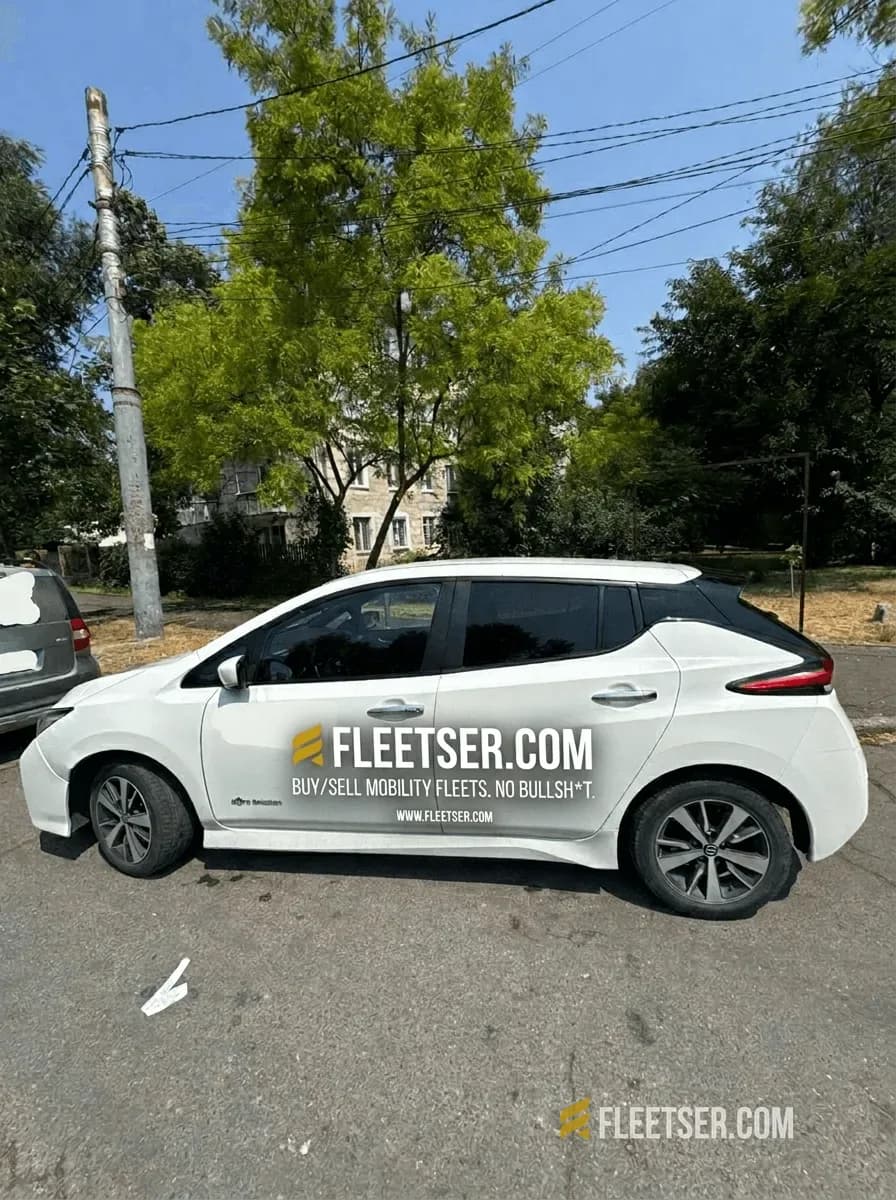
Nissan bu model için ne yayımlıyor ve elimizde ne var.
Üreticinin bu model için yayımladığı föyden. Bir filodaki tek tek araçlar farklılık gösterebilir.
Power and speed depend on the market a vehicle was built for. EU pedal-assist bikes are capped at 250 W and 25 km/h under EN 15194, and scooter limits are set nationally - 20 km/h in Germany, 25 in most of the rest. On shared fleets these are normally firmware settings rather than hardware, so ask us what a fleet is currently configured to and what it can be set to for your market.
Nissan yayımlamadığı değerleri başka bir yerden alınan rakamla doldurmak yerine burada boş bırakıyoruz. READ THE AMBIGUITY NOTE FIRST — the figures recorded here describe ONLY the 40 kWh second-generation (ZE1) LEAF. They come from Nissan's own specification sheet, which tabulates the 40 kWh and the e+ 62 kWh side by side. The document is Australian-market, so kerb weight (1,594 kg), GVM (1,988 kg) and payload (437 kg) are AU-homologated values and may differ by a few kg from an EU-registered car. Range is a MANUFACTURER CLAIM, and Nissan's own footnote is explicit about which standard applies: '270km indicative driving range using the new WLTP test procedure for the European spec model' against '315km range tested to Australian NEDC ADR81/02 standard' — the European WLTP figure is the one recorded, because it is the conservative and the EU-relevant one. Charging times are Nissan's own. Deliberately omitted: motGradeability, phyIp and phyFrame — Nissan does not publish them. Two operational facts a spec table cannot express: the LEAF uses CHAdeMO DC fast charging, which is being withdrawn across much of Europe and is already scarce in some countries, and neither generation has active battery thermal management, so repeated rapid charging in a shared-fleet duty cycle degrades the pack noticeably faster than in liquid-cooled rivals. Both bear directly on residual value.