РезультатыПродано единиц транспорта: 30.000+. Стран поставки: 40+.Что продано
Fleetser
Спецификация Nissan

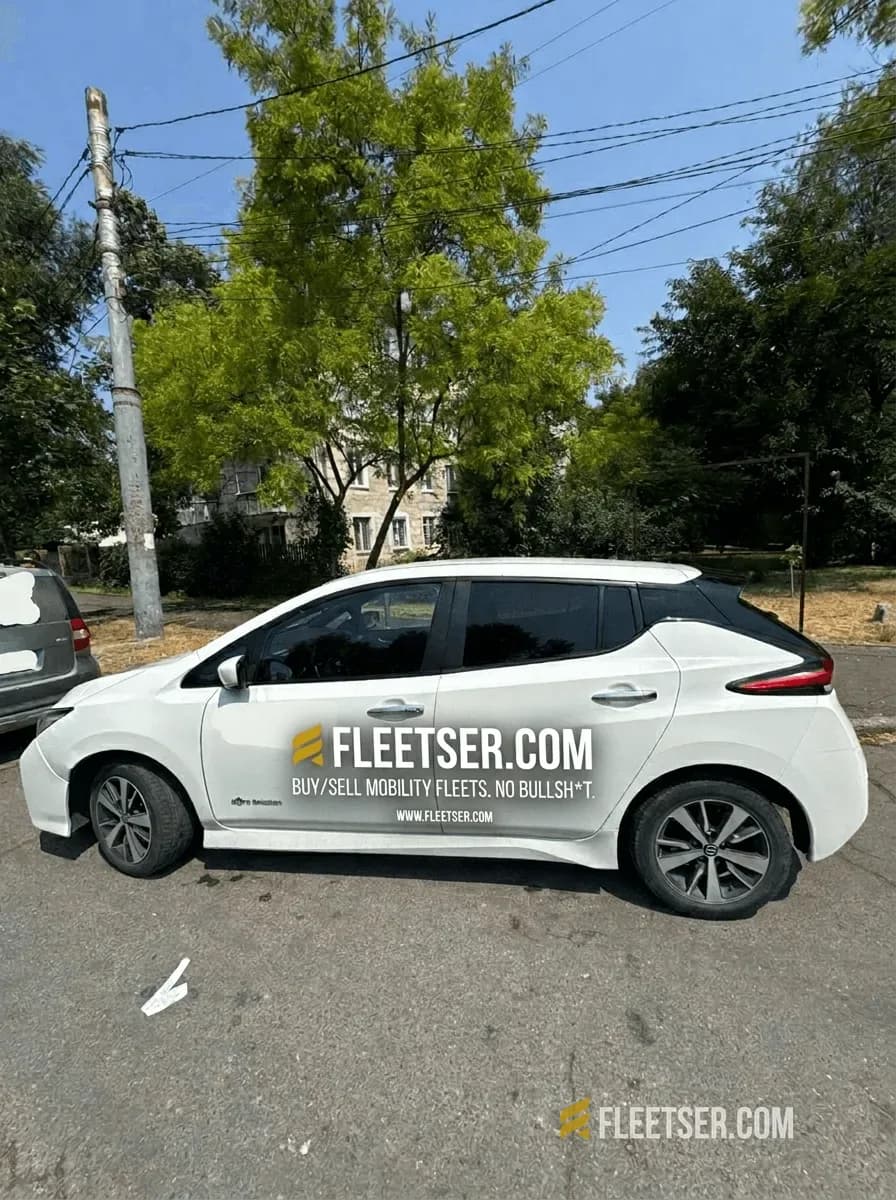
Nissan Leaf

Что Nissan публикует по этой модели и что есть у нас.

Данные из опубликованной спецификации Nissan, Nissan LEAF eSpecs sheet LEA0173_v7, hosted on Nissan's own CDN; no publication date printed on the document (it covers the MY19-onward ZE1 range). Retrieved 2026-09-09.Все модели

Nissan Leaf - Спецификация производителя

Source

Из опубликованного листа производителя по этой модели. Отдельные единицы в парке могут отличаться.

Power and speed depend on the market a vehicle was built for. EU pedal-assist bikes are capped at 250 W and 25 km/h under EN 15194, and scooter limits are set nationally - 20 km/h in Germany, 25 in most of the rest. On shared fleets these are normally firmware settings rather than hardware, so ask us what a fleet is currently configured to and what it can be set to for your market.

Версии этой модели существенно различаются. 'Nissan Leaf' spans two generations and four battery sizes, and the badge is identical. FIRST GENERATION (ZE0/AZE0, 2010-2017): 24 kWh, 80 kW / 107 hp motor, 187 lb-ft; from MY2016 Nissan offered a 30 kWh pack on SV/SL while the base S kept 24 kWh — Nissan's own 2016 US press kit gives 84 miles EPA for the 24 kWh and 107 miles EPA for the 30 kWh, both with 192 cells. SECOND GENERATION (ZE1, 2018 onward): 40 kWh, 110 kW, 320 Nm, 350 V, 270 km WLTP, 1,594 kg, 145 km/h — the figures recorded above; and e+ 62 kWh, 160 kW, 340 Nm, 350 V, 385 km WLTP, 1,736 kg, 158 km/h, which is 142 kg heavier and needs 11h30 rather than 7h30 on a 6.6 kW AC supply. So a 2013 24 kWh car and a 2019 62 kWh car are both 'Nissan Leaf' with roughly a 2.6x difference in usable energy and a completely different charging profile. Two further warnings. Battery health, not badge, sets the value: a 2013 24 kWh car will typically have lost a large fraction of its original capacity, and the gen-1 packs in hot climates degraded severely — always read the state-of-health bars or a CAN-bus SOH report per car, never assume nameplate kWh. And gen-1 cars from 2011-2012 in some markets shipped with a 3.3 kW on-board AC charger rather than 6.6 kW, doubling overnight turnaround time. The 62 kWh e+ is also physically slightly taller in some markets. Price and plan charging per VIN, not per model.
Батарея и запас хода
Nominal voltage
350 V
Pack capacity
40 kWh (laminated lithium ion)
Claimed range
270 km indicative driving range using the WLTP test procedure for the European spec model — manufacturer claim
Charge time
AC 6.6 kW (32 A Mode-3) 7h30; DC 50 kW CHAdeMO 60 min; DC 100 kW CHAdeMO 60 min (20-80%)
Battery
Fixed
Мотор и характеристики
Rated power
110 kW maximum power; 320 Nm maximum torque
Top speed
145 km/h
Max rider load
437 kg payload (GVM 1,988 kg) — Australian homologation
Габариты и конструкция
Net weight
1,594 kg (kerb)
Dimensions
4,490 × 1,788 × 1,540 mm; wheelbase 2,700 mm
Wheel size
215/50 R17
Brakes
Ventilated disc front and rear

То, что Nissan не публикует, остаётся здесь пустым, а не заполняется цифрой из стороннего источника. READ THE AMBIGUITY NOTE FIRST — the figures recorded here describe ONLY the 40 kWh second-generation (ZE1) LEAF. They come from Nissan's own specification sheet, which tabulates the 40 kWh and the e+ 62 kWh side by side. The document is Australian-market, so kerb weight (1,594 kg), GVM (1,988 kg) and payload (437 kg) are AU-homologated values and may differ by a few kg from an EU-registered car. Range is a MANUFACTURER CLAIM, and Nissan's own footnote is explicit about which standard applies: '270km indicative driving range using the new WLTP test procedure for the European spec model' against '315km range tested to Australian NEDC ADR81/02 standard' — the European WLTP figure is the one recorded, because it is the conservative and the EU-relevant one. Charging times are Nissan's own. Deliberately omitted: motGradeability, phyIp and phyFrame — Nissan does not publish them. Two operational facts a spec table cannot express: the LEAF uses CHAdeMO DC fast charging, which is being withdrawn across much of Europe and is already scarce in some countries, and neither generation has active battery thermal management, so repeated rapid charging in a shared-fleet duty cycle degrades the pack noticeably faster than in liquid-cooled rivals. Both bear directly on residual value.

Парки Nissan Leaf, доступные сейчас