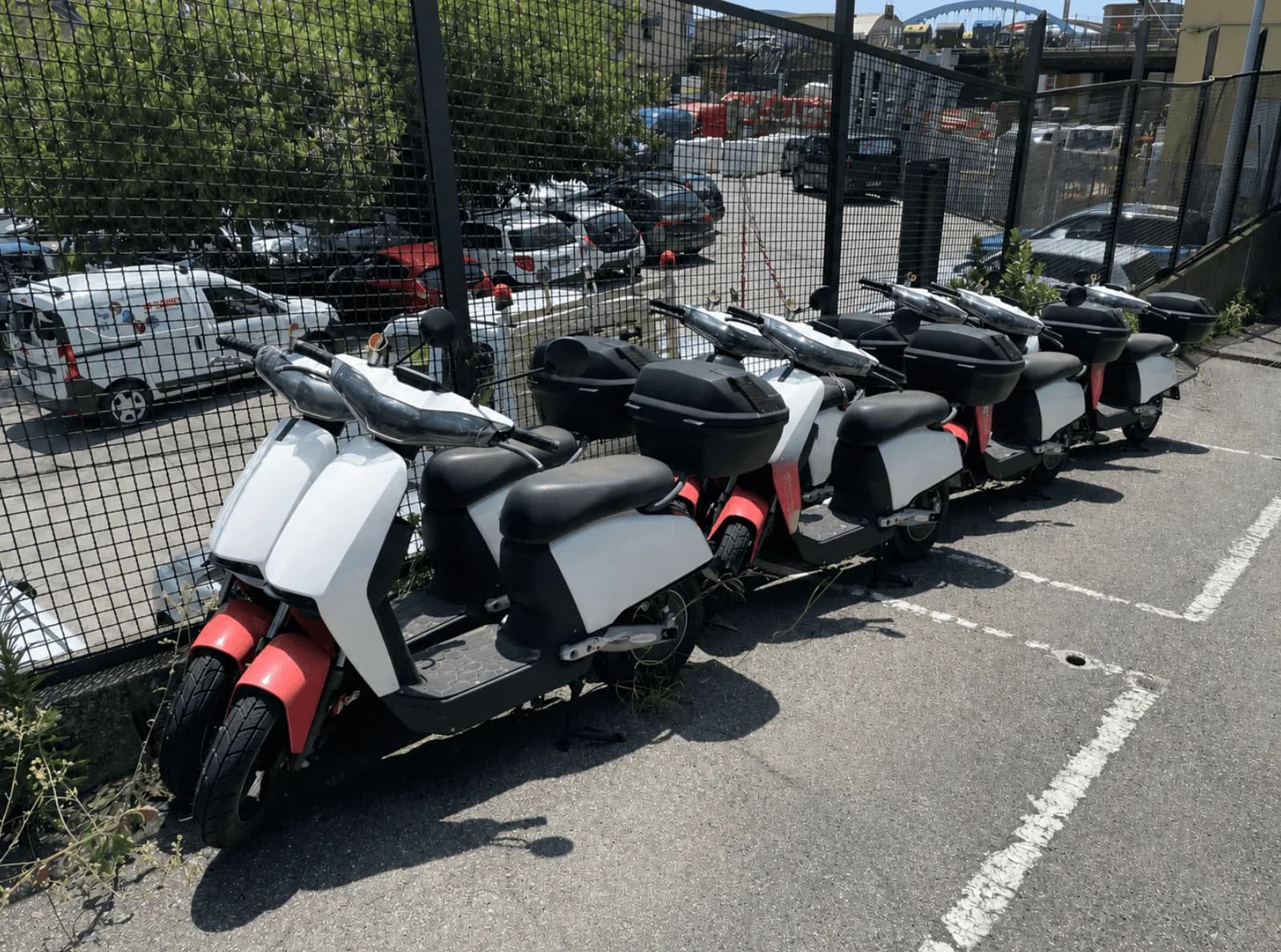
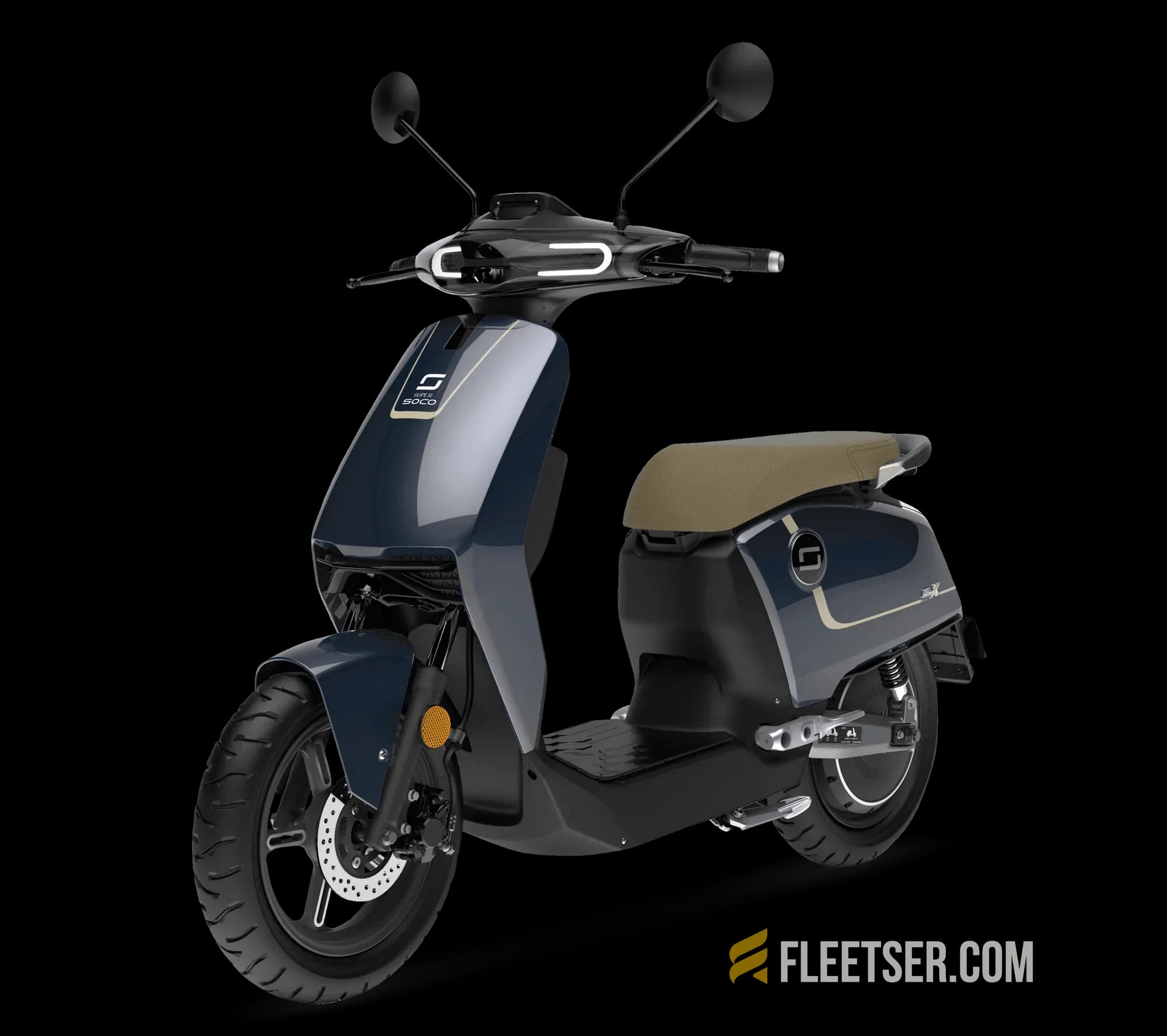
Τι δημοσιεύει η Super Soco για αυτό το μοντέλο, και τι έχουμε από αυτό.
Από το δημοσιευμένο φύλλο του κατασκευαστή για αυτό το μοντέλο. Οι επιμέρους μονάδες ενός στόλου μπορεί να διαφέρουν.
Power and speed depend on the market a vehicle was built for. EU pedal-assist bikes are capped at 250 W and 25 km/h under EN 15194, and scooter limits are set nationally - 20 km/h in Germany, 25 in most of the rest. On shared fleets these are normally firmware settings rather than hardware, so ask us what a fleet is currently configured to and what it can be set to for your market.
Ό,τι δεν δημοσιεύει η Super Soco μένει κενό εδώ, αντί να συμπληρωθεί με νούμερο από αλλού. Figures come from Vmoto Soco's own shop technical-information page for the CUx, cross-checked against the same page served in French (lang=4) and German (lang=3), which print identical values. Range is a MANUFACTURER CLAIM with a stated test condition — Vmoto writes '75 Km (at 45 Km/h with driver weight 75 Kg)' — i.e. a constant-speed figure with a light rider, not a duty-cycle figure; the pack's marketing headline elsewhere is 80 km. Battery removability is confirmed in Vmoto's own words on the CUx Ducati Special Edition technical page (shop.vmotosoco.com/Pages/info-tecniche-CUx-Ducati-SE?lang=2), which is the same hardware in a different livery: 'The battery is removable and can be charged outside of the scooter.' Note the '60V/4Ah' charger figure is Vmoto's own notation and reads as a 4 A charger, which is consistent with the 8 h standard charge; the 3.5 h figure requires the optional 10 A charger. Deliberately omitted and NOT guessed: phyWeight — Vmoto publishes no kerb weight anywhere on its technical pages (only the 10.5 kg battery mass), and the c. 75 kg figure that circulates comes from dealers; motMaxLoad, motGradeability, phyWheel tyre sizes, phyIp and phyFrame are likewise absent from every Vmoto page checked. The frame field records only the aluminium-alloy rear swingarm that Vmoto does state, not a frame material claim.